

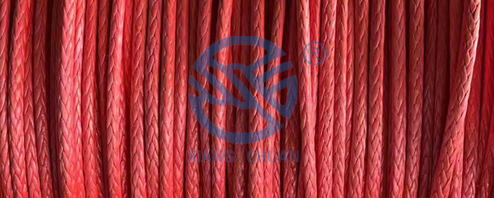
What Standards Should Qualified Mooring Tails Meet?
In the global maritime industry, mooring tails serve as the critical "buffer link" between a vessel’s mooring lines and the shore-based bollards or offshore structures. These specialized components absorb dynamic loads from waves, winds, and currents, protecting both the vessel’s hull and the mooring system from excessive stress. A single failure of an unqualified mooring tail can lead to catastrophic consequences, including vessel drift, collision with docks, cargo damage, or even loss of life. As such, the question "What standards should qualified mooring tails meet?" is of paramount importance to ship operators, port managers, and maritime safety regulators. This article systematically explores the core standards, performance requirements, material specifications, and compliance criteria for qualified mooring tails, drawing on international maritime regulations and industry best practices.
I. Foundational International Standards: The Framework for Qualification
Qualified mooring tails must first adhere to globally recognized international standards, which provide uniform criteria for design, testing, and certification. These standards are developed by authoritative organizations to ensure consistency and safety across the maritime sector, addressing the diverse operating conditions from inland ports to harsh offshore environments.
1.1 ISO Standards: The Global Benchmark
The International Organization for Standardization (ISO) has established two core standards governing mooring tails: ISO 13795 and ISO 23081. ISO 13795, titled "Synthetic fibre ropes for marine applications," sets forth requirements for the raw materials, manufacturing processes, and performance of synthetic ropes—including those used in mooring tails. It specifies that mooring tails must have a minimum breaking strength (MBS) that is 6 to 8 times the maximum working load (MWL), a safety factor critical for withstanding sudden load surges caused by rough seas.
ISO 23081, "Mooring systems and equipment for ships and marine structures," further refines the standards for mooring components, including tails. It mandates that mooring tails must undergo rigorous dynamic load testing, simulating 10,000 cycles of load fluctuations between 10% and 50% of the MBS. Qualified tails must retain at least 80% of their original strength after these cycles, ensuring durability under repeated stress. Additionally, ISO 23081 requires clear labeling of each mooring tail, including MWL, MBS, material type, manufacturing date, and certification number, to facilitate traceability.
1.2 IMO Guidelines: Safety-Focused Regulations
The International Maritime Organization (IMO) supplements ISO standards with guidelines tailored to vessel safety. The IMO’s "Code of Safe Practice for Ships Moored at Berths" (MSC/Circ. 1524) emphasizes that mooring tails must be compatible with the vessel’s overall mooring system, including the diameter and strength of the mooring lines. It prohibits the use of mooring tails with diameter discrepancies exceeding 10% relative to the connected lines, as this can cause uneven load distribution and premature failure.
For offshore vessels operating in deep waters or harsh weather, the IMO’s "Guidelines for the Design and Operation of Offshore Supply Vessels" (MSC/Circ. 1658) imposes stricter requirements. Mooring tails used in these scenarios must be resistant to ultraviolet (UV) radiation, saltwater corrosion, and chemical exposure (e.g., from oil or drilling fluids) and must pass low-temperature performance tests to ensure flexibility and strength in environments as cold as -20°C.
1.3 Classification Society Requirements: Vessel-Specific Compliance
Classification societies such as Lloyd’s Register (LR), American Bureau of Shipping (ABS), and DNV GL have developed additional standards tailored to specific vessel types. For example, ABS’s "Guide for Mooring Systems" requires mooring tails used on tankers to have flame-retardant properties, as specified in IMO’s SOLAS Convention, to mitigate fire risks in the event of oil spills. LR’s "Rules for the Classification of Ships" mandates that mooring tails for container ships, which experience high dynamic loads due to cargo stacking, must undergo fatigue testing with 20,000 load cycles—double the ISO 23081 requirement—to ensure reliability during long-haul voyages.
II. Core Performance Standards: Strength, Durability, and Reliability
Beyond compliance with international regulations, qualified mooring tails must meet strict performance standards that directly impact their ability to protect the mooring system. These standards focus on four key areas: load-bearing capacity, fatigue resistance, environmental durability, and failure safety.
2.1 Load-Bearing Capacity: Safety Factors and Load Distribution
The primary function of a mooring tail is to absorb and distribute loads, so its load-bearing capacity is non-negotiable. Qualified mooring tails must have a MBS that aligns with the vessel’s mooring requirements—for example, a 50,000 DWT bulk carrier typically requires mooring tails with an MBS of 200-300 kN. The safety factor (MBS/MWL) must never be less than 6, as specified in ISO 13795, but many operators opt for a safety factor of 8 for offshore or high-risk applications.
Equally important is the tail’s ability to distribute loads evenly across its cross-section. Uneven load distribution, often caused by poor manufacturing (e.g., uneven braiding of synthetic fibers), can create weak points that lead to sudden failure. Qualified mooring tails must pass a "load uniformity test," in which strain gauges are attached to multiple points along the tail to ensure that no single section bears more than 15% more load than the average during testing.
2.2 Fatigue Resistance: Withstanding Repeated Dynamic Loads
Mooring tails operate under constant dynamic loads from waves, winds, and vessel movement, making fatigue resistance a critical performance standard. As required by ISO 23081, qualified tails must undergo dynamic fatigue testing that simulates real-world conditions. For example, in a typical test, the tail is subjected to alternating loads between 10% (minimum working load) and 50% (peak working load) of its MBS for 10,000 cycles. After testing, the tail’s residual strength must be at least 80% of its original MBS, and there must be no visible signs of fiber fraying or structural damage.
For mooring tails used in rough seas (e.g., North Atlantic routes), classification societies often require extended testing of 20,000 cycles. A study by DNV GL found that unqualified tails typically fail after 3,000-5,000 cycles, while those meeting ISO standards can withstand 15,000+ cycles without significant performance degradation.
2.3 Environmental Durability: Resistance to Harsh Maritime Conditions
Maritime environments expose mooring tails to a range of corrosive and damaging factors, so qualified tails must meet strict environmental durability standards. These include:
Saltwater Corrosion Resistance: Synthetic fibers such as polyester and polypropylene are inherently resistant to saltwater, but the coatings and fittings (e.g., end terminations) of mooring tails must also be corrosion-resistant. Qualified tails use galvanized steel or stainless steel fittings that pass a 1,000-hour salt spray test (per ASTM B117) with no more than 5% rust formation.
UV Radiation Resistance: Prolonged exposure to sunlight degrades synthetic fibers, reducing strength. Qualified mooring tails are treated with UV-stabilizing coatings that meet ISO 4892-3 (accelerated weathering test). After 1,000 hours of UV exposure, the tail’s strength must remain at least 90% of its original value.
Chemical Resistance: For vessels carrying chemicals or operating in offshore oil fields, mooring tails must resist degradation from oils, solvents, and acids. Qualified tails made from high-density polyethylene (HDPE) or aromatic polyamide fibers can withstand exposure to hydrocarbons and weak acids for 1,000 hours with less than 10% strength loss.
2.4 Failure Safety: Predictable and Non-Catastrophic Failure Modes
Even with rigorous standards, mooring tails may eventually fail—but qualified tails must fail in a predictable, non-catastrophic manner to allow time for emergency response. This means avoiding "sudden snap" failures; instead, qualified tails should exhibit gradual degradation, such as fiber fraying or a slow decrease in load-bearing capacity, that is detectable during routine inspections.
To ensure this, ISO 13795 requires that mooring tails have a "failure mode test," in which the tail is subjected to increasing loads until failure. Qualified tails must stretch by at least 15% before breaking, providing a visual warning of impending failure. In contrast, unqualified tails often break suddenly with less than 5% stretch, leaving no time for crew to react.
III. Material and Manufacturing Standards: The Building Blocks of Quality
The performance of mooring tails is directly determined by their materials and manufacturing processes. Qualified mooring tails must meet strict standards for raw material selection, production techniques, and quality control.
3.1 Raw Material Standards: Choosing the Right Fibers
The choice of fiber material depends on the application, but all qualified mooring tails use high-performance synthetic fibers that meet ISO 13795 specifications. Common materials include:
Polyester: The most widely used material for general-purpose mooring tails, polyester offers excellent strength, UV resistance, and saltwater durability. Qualified polyester fibers must have a tensile strength of at least 800 MPa and a modulus of elasticity of 10 GPa (per ISO 11811).
- Polypropylene: Used for lightweight applications (e.g., small vessels or temporary mooring), polypropylene is buoyant and chemical-resistant. Qualified polypropylene fibers must have a tensile strength of 500 MPa and meet ISO 11811-2 for marine use.
- Aromatic Polyamides (Kevlar): For high-performance applications (e.g., offshore drilling rigs), aromatic polyamides offer exceptional strength-to-weight ratios. Qualified Kevlar-based mooring tails must meet ISO 10406-2, with a tensile strength of 3,000 MPa and resistance to high temperatures (up to 200°C).
Raw materials must be sourced from certified suppliers and undergo batch testing to ensure consistency. For example, each batch of polyester fiber used in mooring tails must be tested for tensile strength, elongation, and UV resistance, with test results documented in the material’s certification.
3.2 Manufacturing Standards: Precision and Consistency
The manufacturing process of mooring tails involves braiding or twisting fibers into a rope-like structure, followed by the attachment of end terminations (e.g., shackles or eyes). Qualified mooring tails must be manufactured in facilities that meet ISO 9001 quality management standards, ensuring consistent production practices.
Key manufacturing standards include:
Braiding/Twisting Precision: The braiding pattern must be uniform, with no loose fibers or uneven tension. For braided mooring tails, the pitch (distance between braid cycles) must vary by no more than 5% along the tail’s length to ensure even load distribution.
End Termination Strength: The end terminations are often the weakest point of a mooring tail, so qualified tails use mechanical crimping or resin bonding that meets ISO 10245. The termination must retain at least 90% of the tail’s MBS, and pull tests are required for every 50 tails produced.
Coating Application: UV and corrosion-resistant coatings must be applied evenly, with a thickness of 50-100 μm. Coating adhesion is tested using the cross-hatch method (ASTM D3359), with no peeling allowed after testing.
3.3 Quality Control: Rigorous Testing at Every Stage
Qualified mooring tails undergo multiple quality control tests during and after manufacturing. These include:
In-Process Testing: During braiding, samples are taken every 100 meters to test tensile strength and elongation. Any batch failing these tests is rejected.
Final Inspection: Each mooring tail is visually inspected for defects (e.g., frayed fibers, uneven coating, or faulty terminations) before leaving the factory. A random sample of 5% of each production run undergoes full performance testing, including MBS, fatigue, and environmental resistance tests.
Certification: Qualified mooring tails come with a certificate of compliance, listing the manufacturing date, material specifications, test results, and compliance with relevant standards (e.g., ISO 13795, ABS guidelines).
IV. Application-Specific Standards: Tailoring to Vessel and Environment
Mooring tails must be tailored to the specific vessel type, operating environment, and mooring conditions. Qualified tails meet application-specific standards that address the unique challenges of different maritime scenarios.
4.1 Port and Berth Mooring Tails
For vessels moored at ports (e.g., container ships, tankers), mooring tails must withstand moderate dynamic loads and frequent handling. Standards include:
Compliance with ISO 23081 and the port’s specific regulations (e.g., the Port of Singapore’s "Mooring Equipment Guidelines").Resistance to abrasion from dock surfaces, with a minimum abrasion resistance of 50,000 cycles (per ISO 12946-2).Compatibility with shore-based mooring equipment, including bollards and winches, with diameter and termination type matching the port’s specifications.4.2 Offshore Mooring TailsOffshore vessels (e.g., oil rigs, wind farm service vessels) operate in harsh conditions with high waves and strong currents, so their mooring tails have stricter standards:
Compliance with IMO MSC/Circ. 1658 and DNV GL’s "Offshore Mooring Systems" guidelines.Low-temperature performance, with strength retention of at least 90% at -20°C (per ISO 14829).Resistance to marine growth (e.g., barnacles), with an anti-fouling coating that meets ISO 10286.4.3 Emergency Mooring TailsEmergency mooring tails, used for quick deployment during vessel drift, have unique standards focused on portability and rapid use:
Lightweight design, with a weight-to-strength ratio of no more than 0.5 kg/kN.Easy-to-use terminations (e.g., quick-release shackles) that can be attached in less than 2 minutes.Visibility, with high-visibility orange or yellow coloring and reflective strips to aid deployment in low light.V. Compliance and Certification: Ensuring QualificationMeeting technical standards is only part of the qualification process—mooring tails must also be certified by recognized authorities and maintained in compliance with standards throughout their service life.
5.1 Third-Party Certification
Qualified mooring tails require third-party certification from organizations such as ABS, LR, or DNV GL. The certification process involves:
Review of manufacturing processes and quality control systems.Witnessed testing of sample tails for MBS, fatigue, and environmental resistance.Issuance of a certificate of compliance, which is valid for 5 years (renewable with re-testing).Port authorities and vessel operators often require proof of third-party certification before allowing mooring tails to be used, as it provides independent verification of quality.
5.2 In-Service Compliance: Inspection and Maintenance
Qualification does not end with certification—mooring tails must be maintained in compliance with standards throughout their service life. The IMO and classification societies recommend:
Routine Inspections: Visual inspections every 3 months, checking for fraying, coating damage, corrosion, and termination wear. Any tail with more than 10% fiber damage must be removed from service.Periodic Testing: Load testing every 2 years to verify strength retention. Tails that fail to meet 80% of their original MBS must be replaced.Service Life Limits: A maximum service life of 5 years for general-purpose mooring tails and 3 years for offshore tails, regardless of condition, to account for undetectable fiber degradation.VI. Conclusion: The Importance of Adhering to StandardsQualified mooring tails are not just components of a vessel’s mooring system—they are critical safety barriers that protect lives, cargo, and infrastructure. The standards governing mooring tails, from ISO and IMO regulations to material and manufacturing criteria, are designed to ensure that these components perform reliably under the harsh and dynamic conditions of the maritime environment.
For ship operators and port managers, investing in mooring tails that meet these standards is not just a regulatory requirement but a sound business decision. The cost of qualified mooring tails is far less than the potential losses from a single failure—including vessel damage, cargo loss, port downtime, and safety incidents. As the maritime industry evolves, standards for mooring tails will continue to advance, incorporating new materials (e.g., carbon fiber composites) and testing methods to meet the demands of larger vessels and harsher operating environments.
In the end, the question "What standards should qualified mooring tails meet?" has a clear answer: they must meet the rigorous, globally recognized standards that prioritize strength, durability, and safety. By adhering to these standards, the maritime industry can ensure that mooring tails continue to fulfill their critical role as the "buffer link" that keeps vessels secure and operations running smoothly.
Adresse:
Route n°8 de Chengnan, parc industriel de Chengnan, comté de Baoying, Jiangsu Chine
E-mail:
E-mail1:vanzer@xcrope.com Vanzer Tao
E-mail2:sales@xcrope.com Wang Peng
E-mail3:grace@xcrope.com Grace Li
E-mail4:info@xcrope.com David Cheng
Téléphone de l'entreprise :
+86-514-88253368
Département des ventes à l'étranger :
+86-514-88302931


Droit d'auteur par © Jiangsu Xiangchuan Rope Technology Co., Ltd. | Tous droits réservés
Ce site Web utilise des cookies pour vous garantir la meilleure expérience sur notre site Web.
 English
 Español
 Portugues
 Pусский
 Deutsch
 日本語
日本語 한국어
한국어 العربية
 Italiano
 Ελληνικά
 Polski
 Türk dili
 Indonesia
 Melayu
 Tiếng Việt
 বাংলা
বাংলা norsk
norsk Română
 Azərbaycan
 中文站
中文站
 +86-514-88253368



 Téléphone
Commentaire
(0)